
Indian courts continue to grapple with an enormous and ever-increasing docket of cases. India's economic aspirations and its ambition to remain one of the world's fastest-growing economies are inextricably linked to the existence of a robust, efficient and credible dispute resolution framework. Investors and entrepreneurs, whether domestic or foreign, seek assurance that commercial disputes, will be resolved fairly,
Read My Blog Posts
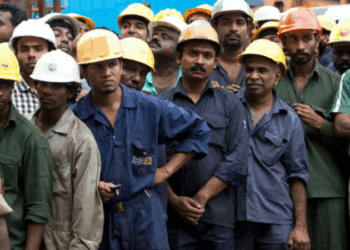
Interpretation of Clauses Relating to Increase in Minimum Wages During the Term of a Contract
One of the recurrent issues in construction and service contracts is the interpretation of clauses that deal with escalation of costs, particularly statutory increases in the minimum wages payable to workmen. Disputes often arise where the contract stipulates that the employer or owner is not liable to bear any part of such increases. The critical question becomes: does this exclusion apply only to the original contract.

Sulaméricas Case And The Three-Stage Inquiry To Determine The Law Of Arbitration (Part II)
This part is in continuation of Part I, where the author discussed the Court of Appeal's judgment in Sulamérica's Case[1] and analysed the two distinct approaches of Mr. Justice Cooke and the Court of Appeal to determine the law of arbitration. Other Cases following Sulamérica's Case U.K. Cases Following the Court of Appeal's Judgment in Sul América's Case, in Arsanovia's the Queen's Bench Division. This part is in continuation of Part I,

Sulaméricas Case And The Three-Stage Inquiry To Determine The Law Of Arbitration (Part I)
Introduction The Indian jurisprudence on the choice of the law of arbitration has evolved through various judicial pronouncements of the Supreme Court of India. The Supreme Court of India has cited approvingly in BALCO's Case[1] and several later judgments[2], the judgments delivered by Lord Justice Longmore in C v. D[3] and Mr. Justice Cooke in Sulamérica Cia Nacional de Seguros SA...

SC On Resolving Conflicting Place Of Arbitration And Exclusive Jurisdiction Clauses
It is not very uncommon to come across conflicting "place of arbitration" and "exclusive jurisdiction" clauses. One may find that the parties expressly designate the place/ seat of arbitration to be at 'X' but also provide for separately an exclusive jurisdiction on civil courts at place 'Y' to decide disputes arising out of the contract. Sometimes, such conflicting clauses...
The Conundrum Of The “Seat” And “Venue” Of Arbitration: When Is “Venue” A “Seat”?
The three judgments of the Supreme Court in quick succession namely Union of India v. Hardy Exploration and Production (India) INC[1] (in short "Hardy's Case"), Brahmani River Pellets Ltd. vs Kamachi Industries Ltd[2] (Brahmani's Case) and the most recent BGS SGS SOMA JV v NHPC Pvt Ltd[3] (BGS's Case), underscore the significance of identifying the "juridical seat" in an...